Planning a Sikkim Tour — A Short Guide
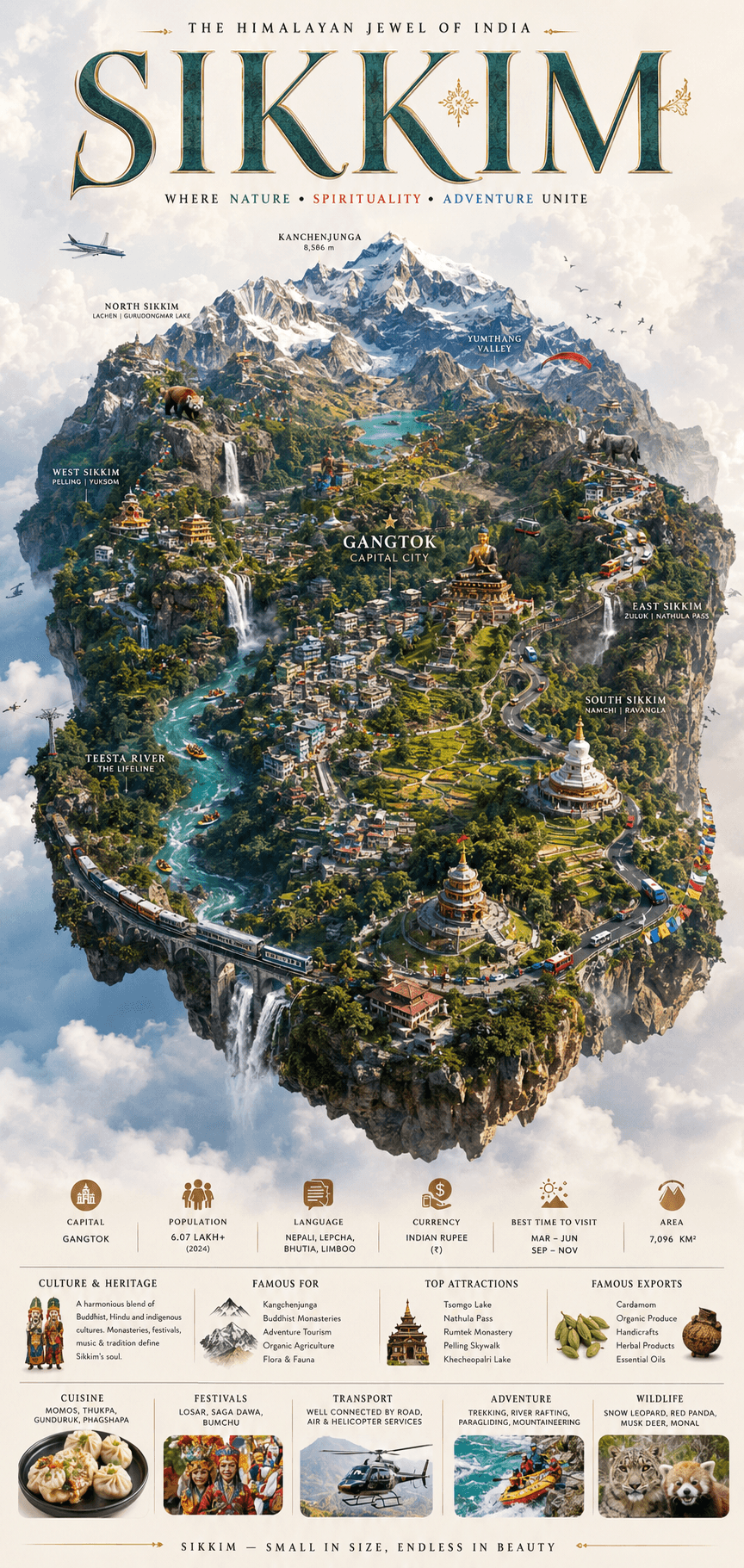
Sikkim is India's second-smallest state by area (7,096 km²) and home to roughly 6.07 lakh people across five districts — Gangtok (the capital), North Sikkim (Lachen, Lachung, Gurudongmar), East Sikkim (Zuluk, Nathula Pass on the old Silk Route), West Sikkim (Pelling, Yuksom — the first capital), and South Sikkim(Namchi, Ravangla, Temi Tea Estate). The official languages are Nepali, Lepcha, Bhutia and Limboo.
The state is dominated by Kanchenjunga (8,586 m) — the third-highest mountain in the world and the guardian deity of the Sikkimese people. Travellers come for monasteries (Rumtek, Pemayangtse, Tashiding), alpine lakes (Tsomgo, Gurudongmar, Khecheopalri), wildlife (snow leopard, red panda, musk deer, monal pheasant), and adventures including river rafting on the Teesta, paragliding over Gangtok, the Goecha La trek, and the Singalila ridge.
Best time to visit Sikkim
March to June for rhododendron blooms in Yumthang and clear views of Kanchenjunga. September to November for the sharpest autumn skies and all high-altitude passes open. December to February for snow at Tsomgo and Nathula, but Gurudongmar and Yumthang access can be weather-dependent. We avoid July and August — landslide season.
Permits and how to reach Sikkim
The nearest airport is Bagdogra (IXB), 124 km from Gangtok, with direct flights from Delhi, Mumbai, Bengaluru, Kolkata, Chennai, Hyderabad and Ahmedabad. Pakyong (PYG) — Sikkim's only airport — also operates limited flights. The nearest railhead is New Jalpaiguri (NJP). Indian nationals do not need a permit for most areas; an Inner Line Permit is required for Nathula, Gurudongmar, Yumthang and the Silk Route. Foreign nationals require a Protected Area Permit for restricted zones — we arrange all permits at no admin fee for guests on our packages.
What to eat in Sikkim
Momos (steamed dumplings), thukpa (noodle soup), gundruk (fermented leafy greens), phagshapa (pork with radish), sel roti (rice-flour ring bread), and sinki soup. Sikkim is also one of India's best-organic states — produce here is certified pesticide-free since 2016. The state's famous exports include large cardamom, herbal products, handicrafts and essential oils.